Latency Arbitrage: When Your Own Feed Works Against You
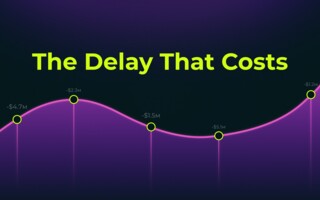
There's a type of loss that doesn't come from market shocks, client complaints, or regulatory action.
It comes from a gap. A small one. Sometimes a few seconds. Sometimes less.
Latency arbitrage is what happens when a trader knows where the market is — and your platform doesn't catch up in time.
The Mechanics Are Simple. The Cost Isn't.
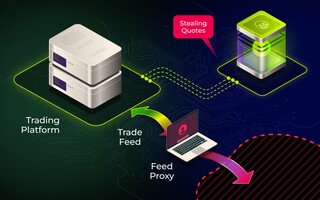
A trader connects to multiple quote sources simultaneously. They compare. When they spot that your feed is running slightly behind, they open a position — already knowing which direction the price is going to move. You fill them at a stale price. The market confirms what they already saw. They close. You absorb the difference.
No news. No chart pattern. No market analysis.
Just your lag, their tool, and a repeating drain on your book.
The individual amounts look small. A few dollars per trade. But these strategies run dozens or hundreds of iterations per session — quietly, across multiple accounts, sometimes coordinated across different logins on different servers.
What Makes It Hard to Catch
Latency arbitrage doesn't look like fraud on the surface.
Positions are opened correctly. Volumes are within limits. Clients don't violate any rules. From a compliance standpoint, everything checks out.
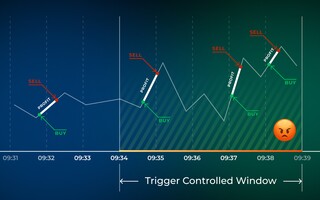
What gives it away is timing. And specifically — the relationship between your quote delays and their entry points.
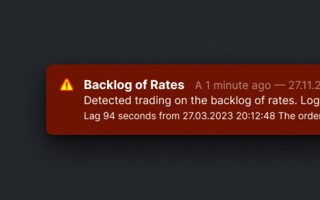
When you map profitability against the moments when your feed had a backlog, the picture becomes clear: these accounts only win when your prices are late. On normal ticks, their edge disappears.
That's not trading skill. That's infrastructure exploitation.
The Group Problem
Individual latency arbitrageurs are manageable. Groups are not.
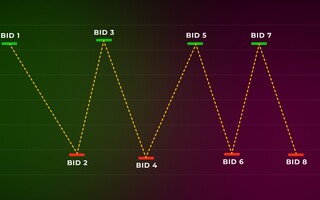
Brokerpilot's experience across client brokers shows a common pattern: the same trigger fires simultaneously on multiple accounts — different logins, different names, sometimes different jurisdictions — with identical entry points, identical instruments, identical timing. Small volumes per account. Large aggregate impact.
These groups know they're visible at scale, so they deliberately stay below individual alert thresholds. Each account looks fine on its own. The pattern only becomes obvious when you look across accounts at the same moment.
What Brokers Actually Do About It
Detection is the first part. Action is the second.
Options range from soft to hard — and the right response depends on whether you're dealing with an occasional opportunist or a structured operation running the same playbook across a coordinated network.
Execution controls, feed quality monitoring, real-time backlog detection, and account clustering analysis are the main tools. The goal isn't to catch every trade after the fact. It's to close the window fast enough that the strategy stops being profitable.
When the timing edge disappears, so does the interest.
What You'll Find in the Articles Below
The pieces collected here don't approach latency arbitrage as a theoretical concept.
They look at how it shows up in real broker environments — the patterns, the cost mechanics, the detection logic, and the controls that actually work. Including cases where the same infrastructure weakness caused losses across weeks without triggering a single alert.
If you run a dealing desk, manage risk for a retail brokerage, or are reviewing your platform setup — these are the numbers worth reading.