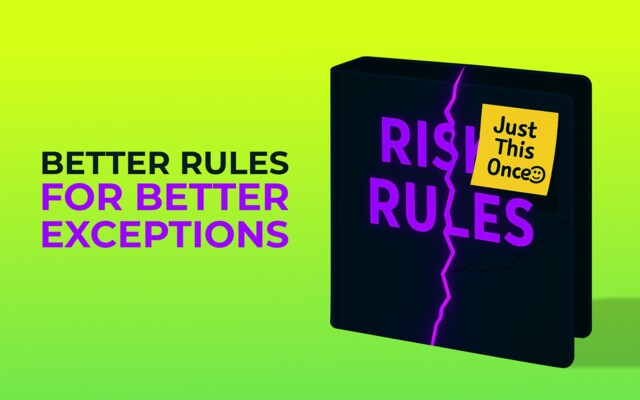
Every broker knows this moment.
A client writes to support with a small, harmless request:
- “Can you check my swap? It looks off.”
- “Could you extend my swap-free status just for today?”
- “Is it possible to restore my margin? It dropped only because of a spike.”
- “I closed the wrong order — can you undo it?”
- “My stop wasn’t fair, please adjust it.”
Nothing dramatic. Nothing malicious. Just… human.
And most brokers — especially the ones who care about service — say yes.
Because saying yes feels good. It feels fair. It feels like the right thing to do.
The problem?
A small exception for one client becomes a large operational risk when repeated 300 times a week.
And it always is.
Why “Exceptions” Are More Expensive Than Toxic Flow
Toxic flow is visible. Toxic flow has patterns. Toxic flow has signatures.
“Friendly exceptions” don’t.
They look harmless. They look normal. They come one by one — never enough for a dashboard to warn anyone.
But they create four hidden costs.
1. Manual actions break timing symmetry
Modern risk systems work because they assume consistent timing:
- swap is applied at a certain moment,
- leverage rules fire at specific thresholds,
- margin recalculates regularly,
- exposure hedges when conditions align.
When a team member manually overrides a state — even to help a client — it breaks timing symmetry.
This creates:
- delayed hedges,
- misaligned exposure,
- incorrect swap calculations,
- mismatched rule activation.
One override doesn’t hurt. Hundreds do.
2. Exceptions create accidental P&L drift
When brokers manually approve something that a risk engine would normally prevent, the P&L impact isn’t visible.
It’s microscopic — until it isn’t.
Small manual adjustments accumulate the same way quiet-market drift does:
- a few pips here,
- a few swap units there,
- a few seconds of delayed state refresh,
- a few misaligned hedges.
After a month, the “friendly exceptions” often cost more than toxic traders.
3. Exceptions teach clients when to ask
And clients learn fast.
One fair exception becomes “normal service.” Then the next client expects it. Then the next. Then the signal groups notice it.
And soon:
Your risk policy becomes whatever the support inbox decides today.
4. Exceptions bypass the rules you paid so much to automate
Brokers invest heavily in:
- risk automation,
- leverage control,
- exposure balancing,
- swap-free enforcement,
- P&L protection,
- real-time hedging,
- rule-based state machines.
These protect the business 24/7.
A single manual override ignores all of them.
Not intentionally — it just feels small in the moment.
But many small holes turn a protective system into a porous one.
Three Realistic Anonymous Cases
Case 1: The “One-Time” Swap Exception
A broker extended swap-free for “only one extra day.” The rule engine didn’t sync with the override. The client stayed swap-free four more days.
Cost: $1,480
Case 2: Restoring Margin to “Help a Loyal Client”
Support returned margin lost during a spike. The hedge on the LP side didn’t match the new client P&L.
Cost: $4,300
Case 3: Manual Close That Broke Exposure
Support manually closed a frozen order. Exposure engine didn’t hedge the offset because the closure bypassed automation.
Cost: $3,900
Why This Happens: The Human Factor of Good Service
Here’s the uncomfortable truth:
Good support often creates bad risk.
Support wants to help. Risk wants to protect. Compliance wants consistency. Operations want speed. Clients want exceptions.
And all of these forces collide at the same point: the support desk.
When you combine:
- pressure to retain clients,
- emotional decisions,
- fast-moving operations,
- unclear permissions,
- ambiguous policies,
…you get the perfect environment for exceptions that cost more than toxic flow.
The Real Challenge: Help Clients Without Breaking the System
The solution isn’t to say no more often.
The solution is to say yes safely.
This means having:
- temporary state changes,
- time-bound exceptions,
- automated rollback,
- exposure-neutral overrides,
- clear approval paths,
- automatic logs,
- risk-confirmed templates.
The best brokers don’t eliminate exceptions. They structure them.
How Leading Brokers Handle Exceptions Safely
1. Every exception becomes a rule template
If a request appears more than twice, it becomes a policy with boundaries.
2. Support works inside approved frameworks
No emotional decisions. Just clear options.
3. All exceptions expire automatically
Nothing lasts longer than intended.
4. All exceptions trigger recalculations
Exposure and hedging stay aligned.
5. Everything is reversible
Rollback must be instant if something breaks.
6. Everything is logged
Compliance and audits stay stress-free.
Why This Topic Matters in 2025–2026
Supervisors care increasingly about:
- fairness,
- consistency,
- client communication,
- swap and margin governance,
- operational resilience.
Manual exceptions without structure are now a regulatory risk, not just an operational one.
Final Thought: The Most Expensive Word in a Brokerage
It’s not “slippage.” It’s not “latency.” It’s not “toxic flow.”
It’s a simple word:
“Sure.”
One “sure” is harmless. Fifty per week quietly reshape your risk book.
A modern broker isn’t the one who never says yes. It’s the one who says yes safely — with timing, exposure, fairness, and reversibility built in.