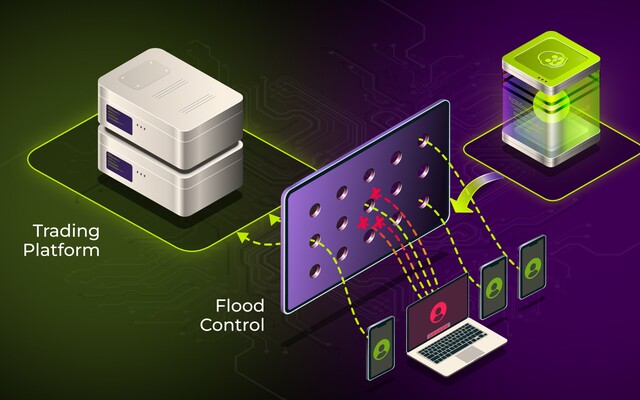
Algorithmic trading is a normal part of the retail broker landscape. Most bots operate within reasonable limits — submitting orders, adjusting positions, responding to market conditions. The problem is not the automation itself. The problem is what happens when a bot — or a deliberate actor — floods the trading server with requests beyond what it can handle.
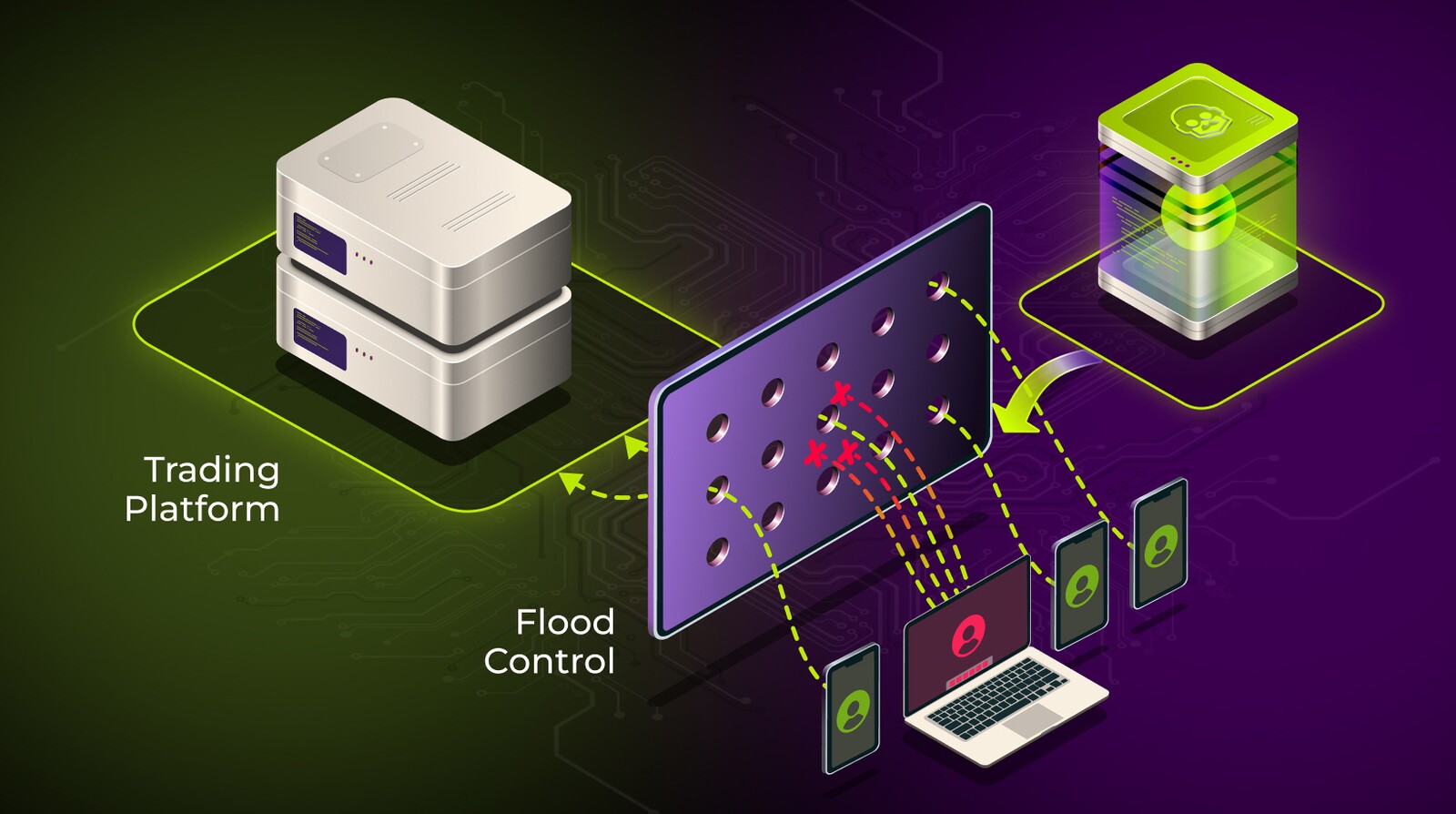
At high enough volumes, excessive trade requests do not just affect one account. They degrade performance across the entire server. Other clients experience slower execution, increased rejection rates, wider effective spreads. In the worst cases, the server crashes entirely. And for some traders, that outcome is not a side effect — it is the strategy.
What the Trade Request Flood trigger does
The Trade Request Flood trigger in Brokerpilot monitors the volume of requests a trader sends to the trading server and acts when defined thresholds are crossed. The settings allow brokers to specify a request limit per trading session and a maximum number of transactions per second — giving precise control over what constitutes acceptable activity for their specific infrastructure and client base.
When the limit is exceeded the trigger can respond in two ways. With automation enabled, trading is blocked automatically for a defined period — no manual intervention required, no delay waiting for a dealer to notice the alert. With automation disabled, a notification is sent to the dealing team who can review the activity and act manually.
Why automation matters here
This is one of the triggers where the speed of response is directly tied to the scale of the problem. A flood of requests can go from nuisance to server incident in seconds. Manual review adds latency that the infrastructure cannot afford. The broker can configure exactly where the threshold sits and what the automated response is — but the execution happens without waiting for a human decision in the moment.
For a broader look at how reaction time directly affects broker P&L and operational stability: the ROI of broker reaction time. And for context on how execution-layer disruptions propagate into wider dealing risk: the hidden latency in every broker stack.
Trade Request Flood is part of Brokerpilot's automatic controls suite.
Book a presentation → to see how the trigger is configured for your trading environment.