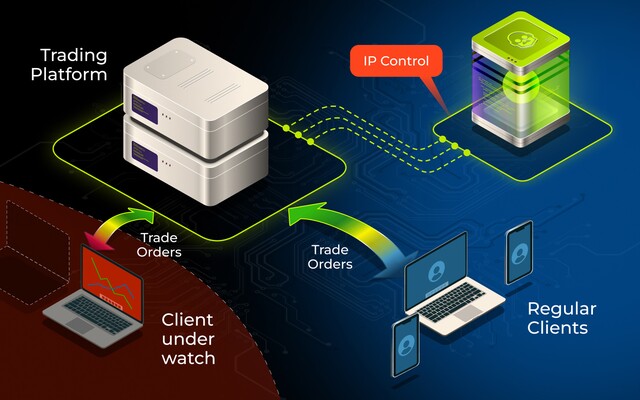
Most broker risk systems look outward — at client behaviour, trading patterns, toxic flow. But some of the most damaging incidents come from inside. Unauthorised trading on client accounts by employees, manipulation of stop-out compensations, bonus skimming through satellite accounts — these are not hypothetical risks. They are patterns the Brokerpilot team has encountered repeatedly across real broker operations.
The IP Control trigger addresses this directly.
Mode 1: Company IP monitoring
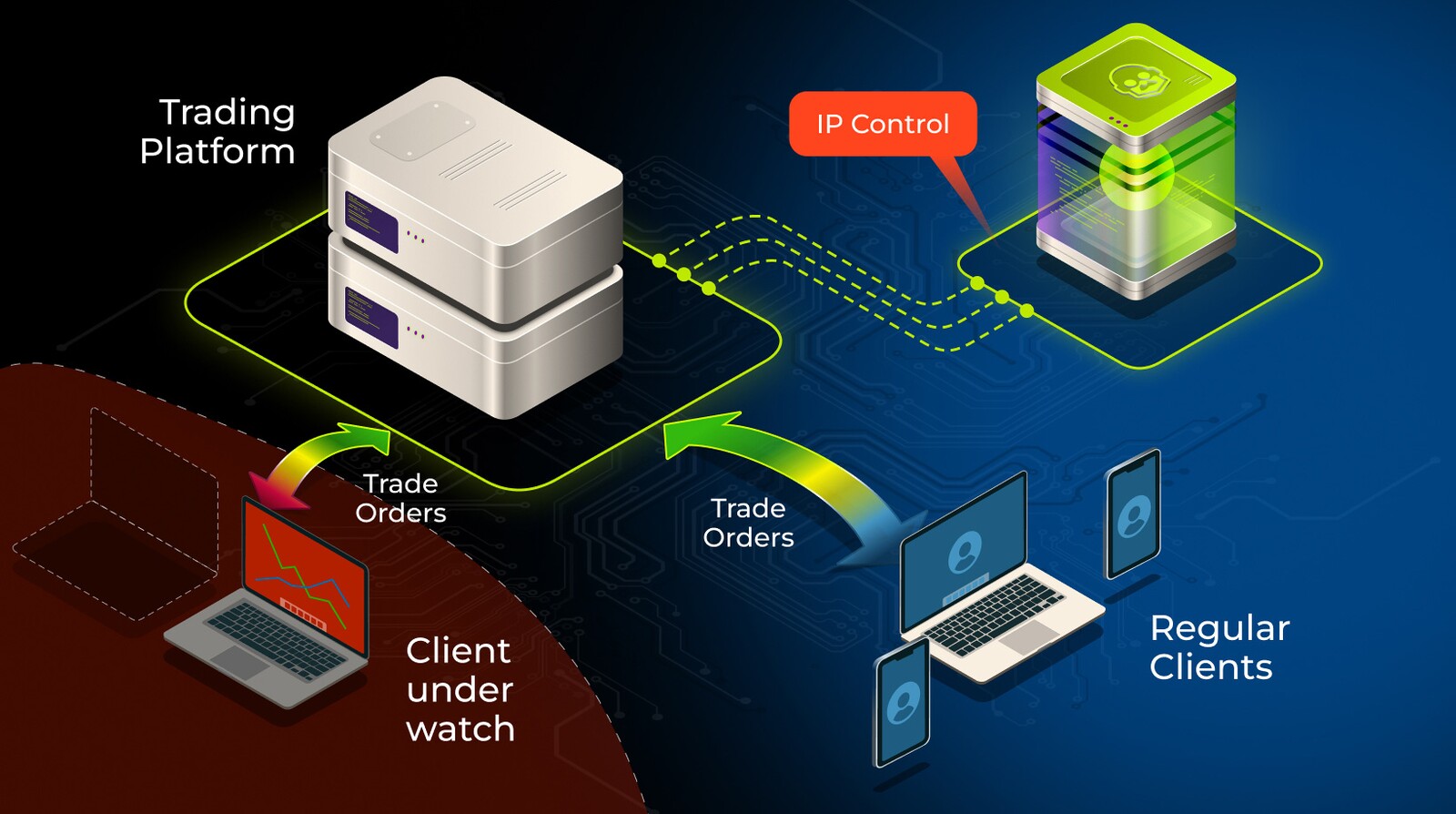
In the first mode, you define your company's internal IP address range — the network from which your employees work. Brokerpilot then monitors live trading platform sessions originating from those addresses. If a session on a client account is detected from a company IP, the system generates an immediate notification to management.
Why does this matter? Many brokers prohibit employees from trading on client accounts as a matter of internal policy. The problem is that without automated monitoring, such activity is nearly impossible to detect in real time. By the time it surfaces — in a compliance audit or a client complaint — the damage is already done. IP Control closes that gap before it becomes an incident.
Mode 2: Multiple simultaneous sessions
The second mode detects multiple active trading sessions on the same account at the same time. A single account logged in from several devices or locations simultaneously is a signal worth investigating. It can indicate shared access, coordinated account usage, or satellite account structures used for bonus abuse or stop-out compensation fraud.
When the trigger fires, it prompts a deeper review of the account's trading activity — not just the session anomaly, but the broader pattern of behaviour around it.
Internal and external risk in one picture
IP Control works alongside Brokerpilot's anti-fraud and abuse detection suite to give brokers visibility across both external client risk and internal operational risk. The combination matters: a complete picture of multi-account activity requires knowing not just who is trading, but from where — and whether that origin should raise questions.
Schedule a call to see IP Control configured on your dealing environment.