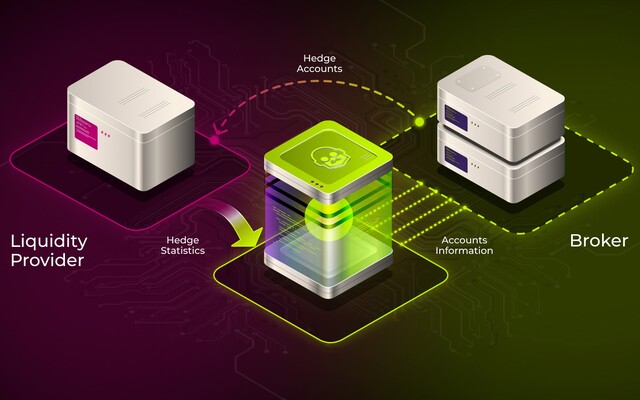
A broker sees an imbalance in the book — too many open buy positions on one instrument, no offsetting trades in dealing. The hedge accounts with liquidity providers should cover it. But the data sits in three different places: the LP terminal, the MT4 server, a spreadsheet somewhere. By the time the picture comes together, the market has moved.
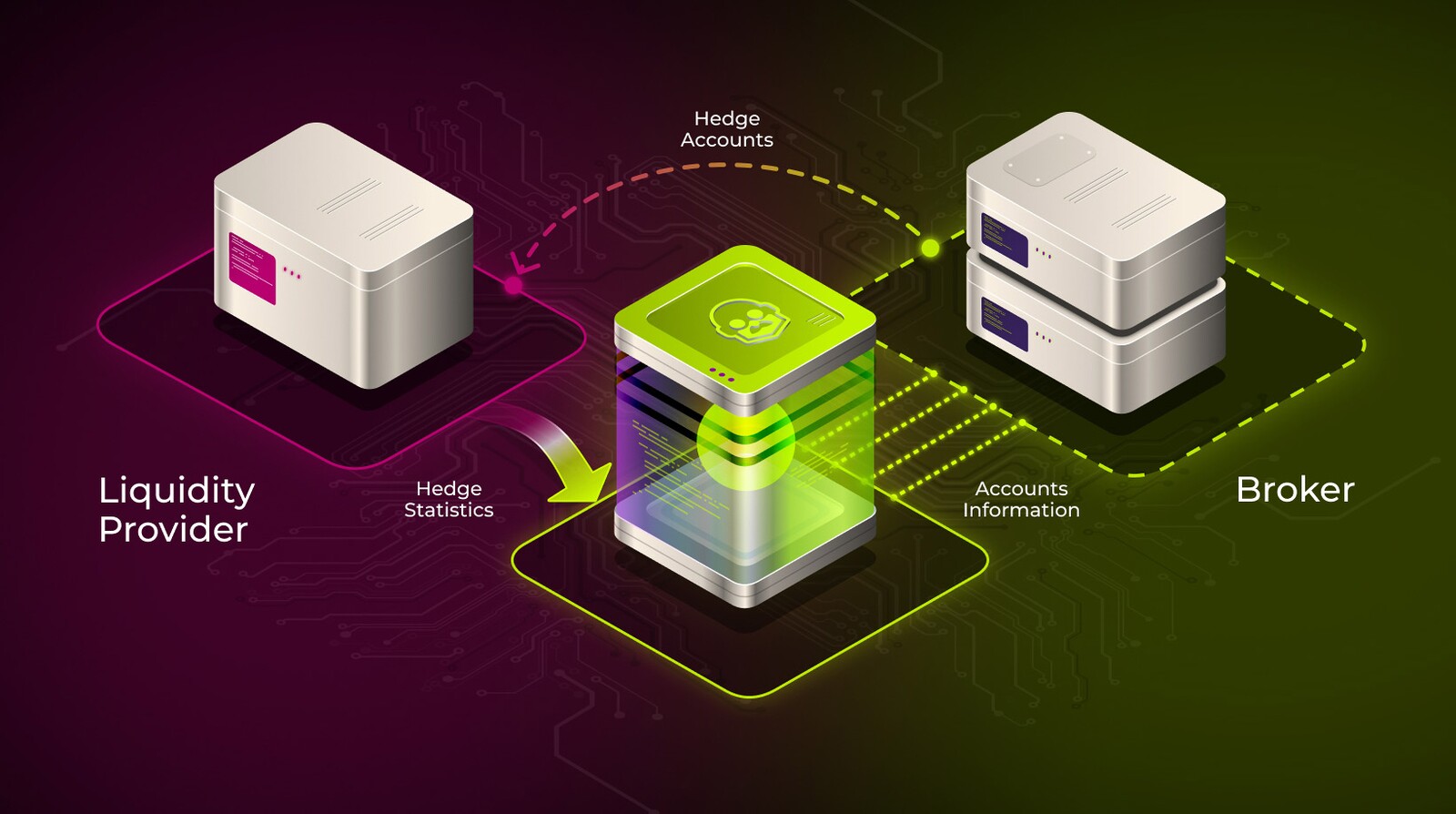
Brokerpilot solves this by connecting hedge accounts opened with third-party liquidity providers directly to the platform. Everything is visible in one place — no switching between applications, no manual consolidation.
What a hedge account does
A hedge account is used to place oppositely-directed positions with another broker — specifically the volume that creates risk in the current dealing. If buy positions accumulate on an instrument without offsetting trades in the book, the broker opens sell positions of the same volume with an LP. This is standard exposure management for A/B-Book brokers.
When multiple hedge accounts are open with different liquidity providers across different platforms, monitoring becomes exponentially more complex. Brokerpilot consolidates it into a single report.
What the broker sees in Brokerpilot
Once hedge accounts are connected, the broker has in one interface: a list of connected hedge accounts and the platforms they are open on; account details — open positions, margin requirements, volumes by instrument; coverage percentage — what share of the volume on each trading instrument is covered by the hedge account; and a consolidated report combining volumes from the broker's trading servers with the total volumes of all hedge accounts.
This is exactly the visibility that matters when a hedging decision needs to happen fast. For more on how reaction time delays translate into P&L losses: the ROI of broker reaction time.
Two triggers for hedge accounts
Margin Level — monitors the margin level on the broker's hedge account. This is critical: if the hedge account margin drops below the threshold and positions are force-closed, the broker loses coverage at exactly the moment it is needed most.
Swap Change Alert — monitors swaps on hedge sources and notifies the broker when swap values change. An unexpected shift in LP swap conditions directly affects the cost of maintaining hedge positions — and changes the overall economics of the hedging strategy. This is especially relevant for brokers running swap-free accounts: swap-free isn't free.
Hedge account functionality is part of Brokerpilot's dealing operations solution.