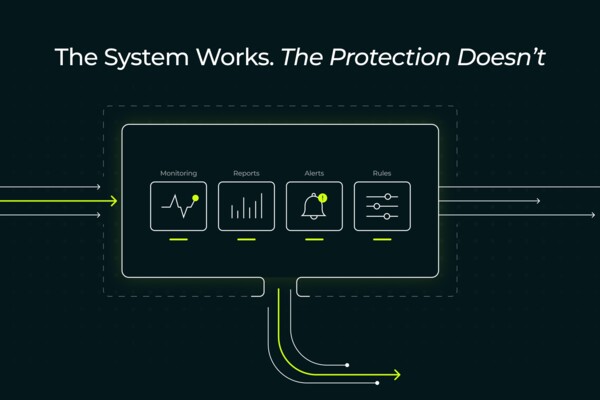
Every broker builds a risk system at some point. Parameters are set, thresholds are defined, someone writes down what the alerts mean and who acts on them. And then the market moves on — and the system doesn't.
This isn't negligence. It's the natural lifecycle of operational infrastructure. Rules get written for the conditions that existed when they were written. Markets change. Client behaviour changes. Instruments change. The rules stay.
The result is a risk system that still runs, still generates reports, still sends alerts — but has quietly stopped protecting the broker the way it was designed to.
How risk systems go stale without anyone noticing
The failure mode is rarely dramatic. There's no single moment when the system breaks. Instead, it drifts. The thresholds that were calibrated for a book dominated by EUR/USD flow start misreading a book where gold is 70% of volume. The alert that was tuned for individual account spikes doesn't trigger when the problem is twenty accounts behaving identically. The hedge rules that worked with two servers don't cover the same logic across five.
Take any one of those gaps alone and it doesn't move the needle. Take all three at once and the dashboard looks fine while the P&L quietly bleeds quarter after quarter.
There's a specific pattern that shows up repeatedly in dealing desk conversations. A broker will describe a period where "nothing major happened" — no incidents, no client complaints, no large individual losses. And then mention, almost as an afterthought, that the past few quarters haven't quite hit expectations. The two things feel unrelated. They usually aren't.
What changed in the past three years
Three structural shifts have made risk system drift significantly more likely — and more expensive — than it used to be.
The first is the commodities shift. Gold went from a secondary instrument to the dominant one, accounting for around 74% of retail CFD activity by mid-2026. The traders who gravitate toward gold in a trending market behave differently from FX retail traders — shorter durations, higher entry correlation around news events, and a win rate that can stay elevated for weeks during sustained trends. A risk framework built around FX retail assumptions doesn't just misread this flow. It may actively misclassify it.
The second is platform fragmentation. MT5 overtook MT4 in total trading volume in 2025, but most brokers are running both — often alongside cTrader and sometimes a proprietary frontend. Each platform has its own routing logic, its own timing, its own access to liquidity. A risk system that was built for a single-platform environment has no native way to compare behaviour across platforms, which means it can't see the cross-platform patterns that sophisticated clients increasingly exploit.
The third is the speed of client adaptation. The traders who are systematically profitable against broker positions — latency arbitrageurs, organised groups, coordinated account clusters — are not static. They adjust their methods based on what works. A broker whose detection parameters haven't been reviewed in eighteen months is, in effect, running signature-based detection against an evolving threat. It catches what it was originally tuned to catch, and misses everything that developed since.
The signals that the system is no longer working
Some of these are visible. Most aren't — which is the problem.
The visible ones: P&L that consistently underperforms expectations without a clear cause. Hedge costs that seem higher than they should be relative to volume. Session reports that show everything "within parameters" but something still feels off to the dealer who's been watching the book for years.
The less visible ones are harder to catch precisely because the system isn't flagging them. An absence of alerts during a period of high commodity volatility isn't necessarily good news — it may mean the thresholds aren't set for the current environment. A group of accounts that individually look clean but collectively show an 87% win rate over four sessions is exactly the kind of pattern that sits below the radar of a system looking for single-account anomalies. Temporary rule exceptions that have been active for six months are no longer temporary — they're structural, and they're distorting the risk picture without appearing on any report.
A short history of risk system failures
Ask anyone who's spent a few years on a dealing desk and they'll tell you some version of the same story. Names change. The instrument changes. The timeframe changes. But the plot doesn't.
A broker runs a quiet period. Nothing triggers. The team is experienced and attentive. And then a market event occurs — a macro data print, a geopolitical shock, a sustained trend in a single instrument — and it becomes clear that the risk parameters were calibrated for a different environment. The system wasn't broken. It was just out of date.
What varies is the cost of discovering this. Some brokers find out through a bad quarter that prompts a review. Others find out through a specific event that forces the issue. The ones who find out earliest are the ones who treat risk system review as a regular operational task rather than something that happens in response to a problem.
What a working risk system actually does
There's a difference between a risk system that works and one that runs. They look identical from the outside. The difference shows up in whether the dealing team actually acts on the alerts, trusts the outputs, and understands what the reports are telling them — or whether those things have quietly become background noise.
Alert fatigue is usually the first sign. If dealers have learned to ignore a category of alerts because they fire constantly and almost never mean anything, that category has stopped working. The alert exists. The protection doesn't.
Then there's the question of whether the system sees the book as a whole or as a list of individual accounts. Sophisticated risk isn't sitting in one account anymore. It's spread across twenty accounts that individually look fine and collectively show an 87% win rate. A system that scores accounts one at a time and never aggregates for group behaviour will miss this every time — not because it's broken, but because it was never built to look for it.
And then calibration. A system configured during a low-volatility period has different blind spots than one configured in a volatile market. If the last serious review was eighteen months ago and the instrument mix has shifted significantly since then, the parameters are answering a question the market stopped asking.
What to actually do about it
The practical answer isn't a full rebuild. Most dealing desks don't need to start from scratch — they need to know where the gaps are and close them specifically.
Start with the instrument mix. If gold or other commodities now represent more than 40% of your retail flow, your risk parameters for that flow need to be reviewed separately from FX parameters. The behavioural signals that matter — entry timing relative to news, position duration distribution, leverage usage during high-impact events — are different by instrument class.
Review your temporary exceptions. Any rule that was introduced as temporary and has been active for more than three months needs a deliberate decision: make it permanent, modify it, or remove it. Exceptions that drift into permanent status distort the risk picture in ways that don't show up on standard reports.
Check your group detection. Run an analysis of accounts that individually look within parameters but share IP subnets, CID origins, or show correlated entry timing across sessions. If your system doesn't support this kind of aggregated analysis, that's a capability gap worth addressing directly.
Look at the London open specifically. The Asian-to-London transition window is a consistent soft spot for brokers with significant overnight commodity exposure. If you don't have a specific review process at that point in the session, you have an unmonitored window that sophisticated traders know about even if you don't.
And finally — review your P&L attribution. Not just the total, but the breakdown by client group, instrument, and session. If a quarter underperformed and the cause isn't clearly attributable, the gap is usually in the risk system, not the market.
The harder question
None of this is technically difficult. The challenge isn't knowing what to do — it's the operational inertia that keeps systems running long past the point where they should have been reviewed.
Risk frameworks get built in response to specific problems, with the parameters that made sense at the time. They work. Then the market changes, and they keep working — just on a problem that no longer exists. The alerts fire. The reports come in. Nobody questions it because nothing is obviously broken.
The brokers who figure this out early tend to do it through deliberate review, not crisis. The ones who figure it out late usually do it when the evidence is already sitting in several quarters of results that didn't quite add up.