Five years ago, gold was maybe 20% of a typical retail CFD book. Something to watch during big macro events, hedge occasionally, otherwise not a daily headache.
That number is now 74%.
Metals — mostly gold — account for nearly three quarters of retail CFD activity. The shift didn't happen because brokers invited it. It happened because gold moved, kept moving, and the retail trader figured out that momentum in a trending market is actually quite easy to ride. COVID volatility started it. The tariff chaos of early 2026 finished the job. Gold crossed $3,000, then kept going. J.P. Morgan now has a year-end target above $4,700, and the institutional desks are taking it seriously.
For traders, this is straightforward. Gold trends, gold creates opportunity, gold is where accounts grow.
For a B-book broker sitting on the other side of that flow — it's a different conversation entirely.
The flow you think you understand
Most dealing desks have a mental model for retail FX traders. They come in, they trade EUR/USD or GBP/USD, they hold positions overnight, they lose slowly, the distribution works out over time. The edge is real, it's durable, and the math supports internalizing the flow.
Gold retail traders don't fit that model. At all.
The people who gravitate toward gold right now — especially when it's trending — tend to trade short. They enter around news. CPI data, Fed statements, geopolitical headlines, anything that gives gold a push. They are often right directionally. That's the uncomfortable part. And when gold is in a sustained trend, they stay right for weeks at a time.
The second thing: they don't act independently. Fifty gold traders entering long positions within the same ten-minute window after a CPI miss is not fifty separate decisions. It's one large directional bet spread across fifty accounts. From a risk management standpoint, diversification assumptions that work for regular retail FX simply don't apply here.
So a broker running B-book on that flow during a trending market isn't collecting a steady edge. It's absorbing losses while the accounts on the other side grow.
The risk nobody's dashboard is showing
Here's where it gets harder.
The obvious risk — gold goes up, clients are long, broker is short, P&L suffers — is actually the manageable one. It's visible. It shows up on the exposure screen. A decent dealer will catch it.
The harder version is what happens in the quiet periods between the moves.
When gold is ranging, everything looks fine. Hit ratios are normal, exposure is under control, nothing triggers an alert. But if client positioning is even slightly directional during that range — which it often is, because retail gold traders tend to lean long in a bull market regardless of what price is doing on any given day — the book drifts. Slowly. Session by session. A little bit every day, nothing alarming in isolation.
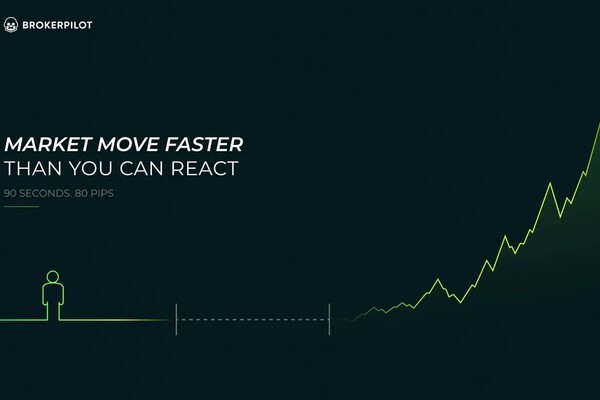
Then gold moves 80 points in ninety minutes after a data release. And the drift that had been building quietly for two weeks becomes visible all at once.
That's not a spike risk. That's an accumulation problem. And most standard risk monitoring isn't built to catch it, because it's looking for events, not gradients.
There's another version that's even more specific. The window between a macro data print and a clean hedge fill — we're talking seconds, sometimes less — is exactly where latency arbitrageurs operate. They're not doing anything exotic. They just react faster than the execution system can catch up. During a gold bull run, that window gets exploited every single time there's a significant data release. The individual cost per event might look small. The cumulative cost over a quarter is not small.
The London open problem
One more thing that doesn't get enough attention: the Asian-to-London session transition.
Asian session gold flow and London session gold flow frequently disagree on direction. There's a window — roughly 8 to 10am London time — where overnight positions are being closed, European traders are opening new ones, and liquidity from the previous session hasn't fully normalized. For a broker with significant gold exposure from the Asian session, this transition is a predictable soft spot that shows up week after week.
Most risk systems don't treat it as a discrete event. They should.
What actually works
Brokers who handle gold flow well are doing a few things differently.
They don't score gold accounts the same way they score FX accounts. The signals are different. Entry timing relative to news, how long positions are held, leverage usage during volatile sessions — these patterns mean something specific in gold that they don't mean in currencies. Putting everything through the same scoring model means missing the things that matter.
They treat the London open as a deliberate checkpoint, not a background process, when gold exposure from overnight is significant. Position review at 8am isn't optional in that case.
And critically: they don't apply the same internalization ratio to gold that they'd apply to EUR/USD, especially when the market is trending. The math that makes B-book work on FX retail flow doesn't automatically transfer. Commodities in a trend are a different instrument. They require different parameters.
This isn't a complicated insight. It's just one that a lot of risk frameworks haven't caught up to yet, because those frameworks were built when gold was 20% of the book, not 74%.
One last thought
The retail CFD market isn't going back to being FX-dominated. Macro uncertainty keeps commodity trading volumes elevated, and the retail trader has figured out that gold in a trending macro environment is easier to trade directionally than currency pairs.
That means the operational assumptions built into most broker risk systems — assumptions that made sense for an FX-heavy book — need a rethink. Not a complete rebuild. Just an honest look at whether what worked in 2019 still works when three quarters of your retail flow is in one trending commodity.
Some brokers have already done that rethink. Most haven't.